Volunteering SA&NT

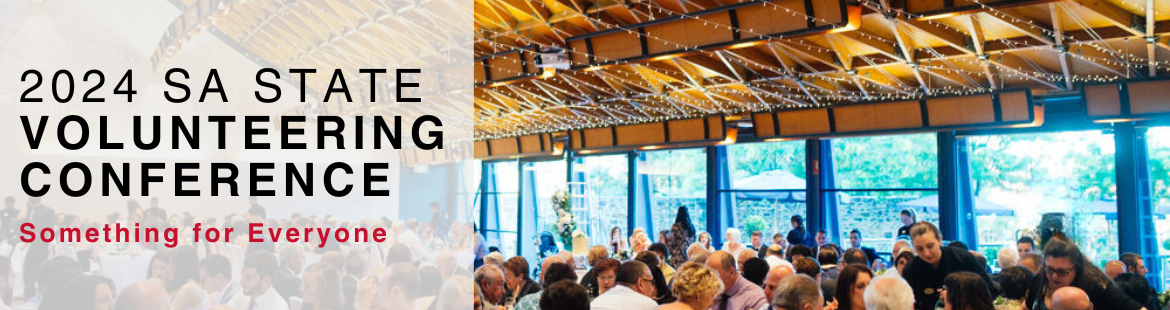
South Australian State Volunteering Conference

The 2025 State Volunteer Conference was an inspiring and energising gathering, bringing together over 250 attendees from across South Australia. Held during National Volunteer Week, the event fostered powerful conversations, new connections, and deepened our shared commitment to supporting, growing and celebrating volunteering.

We’re thrilled with the positive feedback received so far and are proud to share key resources from the conference with our wider community.

On this page, you’ll find session summaries highlighting key insights and takeaways, downloadable presentation slides from the sessions, and speaker bios showcasing the incredible contributors who made the event so impactful.

If you haven’t already, we encourage you to complete the feedback survey shared via email. Your input is invaluable in helping us shape and improve future events.

We hope these resources continue to spark ideas, collaboration, and positive change in your volunteering journey.

Conference Summary

Dr Leonie Lockstone-Binney, Deputy Director of the Griffith Institute for Tourism (GIFT) and a Professor in the Department of Tourism, Sport and Hotel Management at Griffith University, Australia.

Soft Launch of Spatial map of rural volunteer numbers across the state: Building a Rural Volunteer Roadmap. The project is funded by the Australian Research Council and led by Griffith University, and continues to work with partners including VSA&NT. 

Purpose of the Spatial Map 

The primary goal of the spatial map is to provide insights into rural volunteering across Australia, highlighting areas that may be experiencing volunteer shortages. The project’s aim is to enhance the understanding of rural volunteer dynamics, given the existing literature that indicates significant stress on rural volunteers. 

Research Background and Methodology 

The project began with a comprehensive literature review to identify gaps in knowledge regarding rural volunteering. It was noted that rural volunteers were increasingly burdened with demands to support their communities, leading to a pressing need for this research. The methodology involved: 

  • Conducting a literature review on national and international volunteering trends. 
  • Engaging an expert panel to refine indicators of volunteer supply and demand. 
  • Mapping and visualising data to categorise rural communities based on their vulnerability to volunteer shortages. 

Key Indicators for Volunteer Vulnerability 

The project identified key indicators that reflect the supply and demand for volunteers, including population size, youth demographics, and socioeconomic factors. The analysis categorised communities as most vulnerable, moderately vulnerable, or marginally vulnerable to volunteer shortages. 

Tool Features and Feedback 

Dr Lockstone-Binney explained that the spatial map, referred to as the Rural Volunteering Vulnerability Explorer, allows users to explore data at a local level. Users can provide feedback during this soft launch phase to enhance the tool’s development. The dashboard provides detailed reports for each region, allowing organisations to strategise their volunteer recruitment and retention efforts effectively. 

Community Engagement and Future Directions 

The presentation highlighted the importance of community engagement in addressing volunteer shortages. Dr Lockstone -Binney emphasised that understanding the unique characteristics of rural areas can inform better strategies for attracting and retaining volunteers. Future research will focus on actionable recommendations for supporting rural volunteering through a national roadmap, aiming for completion by 2035.  

Conclusion 

Dr. Lockstone-Binney expressed her hope that the project will significantly impact rural communities and enhance their sustainability through improved volunteer engagement.  


Download presentation

George Gouzounis, aged care innovation specialist and leader in AI adoption in the sector. Janeen Harris (Macarthur Disability Services) is a Sector Support and Development Coordinator, supporting CHSP (aged care) providers. Lina Scalfino, President of CO.AS.IT. SA.

This is an overview of a session focused on innovation in the aged care sector, emphasising the importance of volunteer involvement and the upcoming changes with the new Aged Care Act. 

The session began with an introduction from David Jacquier, who highlighted the significance of volunteer projects in aged care, both locally in South Australia and nationally.  

With the new Aged Care Act set to commence on July 1, significant changes are anticipated within the sector. The act aims to improve aged care quality standards, participant rights, and the code of conduct, following extensive consultations after the Royal Commission’s findings. This provides an ideal backdrop for re-evaluating volunteer roles in aged care, as volunteers have been and will continue to be essential to the aged care workforce. 

The speaker outlined various established volunteer roles, such as the Aged Care Volunteer Visitors Scheme social support services, transport and meal preparation and delivery, which remain foundational to aged care. However, there is potential for volunteers to contribute in more innovative ways, including strategic operational changes and the integration of technology in service delivery. 

Three key presenters shared insights on innovation in volunteer roles: 

  • Janeen Harris from Macarthur Disability Services introduced a new resource designed to help organisations review and innovate volunteer roles using a co-production approach. 
  • Lina Scalfino from CO.AS.IT (SA) discussed a project aimed at attracting volunteers from culturally diverse communities, particularly the Italian community, to participate as volunteers in aged care 
  • George Gouzounis from the Multicultural Communities Council of SA focused on the role of artificial intelligence (AI) in aged care, explaining how AI can enhance operational efficiency, while emphasising the importance of understanding its capabilities and limitations. 

The session concluded with a call to action for organisations to embrace innovation in volunteer roles and consider how AI can be effectively utilised. The importance of ongoing training and adaptation to new technologies was underscored, as was the need for careful data management to protect the privacy of service users.

Download presentation

Luke Logothetis, Volunteer Development Officer at City of Port Adelaide Enfield and Shyla Mills, CEO at Palliative Care SA.

Vanita Schwarz, Manager of Stakeholder Engagement Volunteering led the session, emphasising the significance of volunteering and community connections. She highlighted the importance of organisational collaboration to fortify community bonds. 

The aim of the session was to illustrate how volunteering serves as a key connector among people, communities, and organisations. The discussion emphasised the necessity of partnerships and collaborative projects for building stronger, more inclusive communities and enhancing the overall volunteer ecosystem in South Australia. 

Panellist Introductions 

The session featured two distinguished panellists:  

  • Shylla Mills, Chief Executive Officer of Palliative Care SA
  • Luke Logothetis, Volunteer Development Officer for Port Adelaide Enfield Council.  

Topics Discussed 

1. Palliative Care Volunteering 

Shyla presented an initiative funded through collaboration among multiple organisations, including Volunteering SA&NT, aimed at promoting and expanding volunteering within the palliative care space. This project seeks to reframe public understanding of palliative care, emphasising that it extends beyond the older population and includes individuals of all ages with life-limiting diagnoses. The initiative addresses various aspects of care from diagnosis through bereavement, advocating that palliative care is a societal responsibility that transcends health services alone. 

2. Volunteer Management 

Luke shared insights about his role in managing a volunteer program within the local council. He emphasised the importance of supporting local volunteer organisations and developing youth engagement initiatives. Luke noted that the council has a significant number of volunteers and is working towards lowering the minimum age for volunteering. 

The session underscored several key themes: 

  • Community Engagement: Both speakers emphasised the critical role of community connections in fostering a supportive environment for volunteers and beneficiaries. They discussed successful programs such as gardening initiatives and pet companion schemes. 
  • Challenges and Solutions: The panellists addressed challenges in volunteer management, including the need for more volunteer coordinators and the importance of adapting programs to meet community needs. They highlighted the necessity of flexibility in volunteer roles and creating a welcoming environment for all volunteers, particularly younger individuals. 

Conclusion 

The session concluded with a call to action for attendees to engage with local councils and volunteer organisations to strengthen community ties and enhance volunteer opportunities. The speakers advocated for collaboration and resource sharing to cultivate a more inclusive volunteer landscape across South Australia. 

Presented by Georgina Goodrich, Manager, Recovery at DPC, Melissa Jones, CEO at BlazeAid and Zoe Marriott, State Manager at Disaster Relief Australia SA.

Vanita Schwarz, Manager of Stakeholder Engagement Volunteering led the session focused on spontaneous volunteering and disaster recovery efforts in Australia. It features discussions among various speakers from different organisations about their roles and experiences in managing volunteers during emergencies. 

The session featured three distinguished panellists:  

  • Georgina Goodrich Manager, Recovery at Department of Premier and Cabinet (DPC) 
  • Melissa Jones, CEO of BlazeAid SA 
  • Zoe Marriott, State Manager at Disaster Relief Australia (DRA)  

Overview from organisations 

1. Disaster Relief Australia (DRA): Zoe highlighted DRA’s rapid growth since its founding in 2016 and its focus on supporting communities impacted by disasters across Australia. DRA engages both community and corporate volunteers, with an emphasis on mental well-being within its volunteer base, many of whom are veterans.

2. BlazeAid: Melissa, shares the origins of BlazeAid, which started after the Black Saturday bushfires in 2009. BlazeAid has since expanded to operate numerous base camps across Australia, providing disaster recovery assistance and fostering community spirit among volunteers.

3. Department of Premier and Cabinet (DPC): Georgina talked about the DPC’s role in coordinating recovery efforts after disasters, working with various levels of government and NGOs. She emphasised the importance of understanding community needs and adapting recovery strategies accordingly. 

Volunteer Engagement Strategies 

Registration and Onboarding 

Different organisations have unique approaches to registering and onboarding volunteers. BlazeAid adopts a “just come” policy, encouraging spontaneous volunteers to join with minimal red tape, while DRA requires volunteers to register through a dedicated portal to ensure proper screening and safety. 

Role of Mental Health 

Mental health considerations are a significant aspect of volunteer management. Both BlazeAid and DRA emphasised the importance of debriefing sessions for volunteers to discuss their experiences and feelings after working in challenging environments. 

Collaboration and Networking 

The speakers highlighted the need for collaboration among organisations, local councils, and community groups to effectively manage spontaneous volunteering efforts. Building strong relationships and communication channels is crucial for successful recovery operations. 

The session concluded with a call for continued collaboration and support for spontaneous volunteers, recognising their invaluable contributions to disaster recovery efforts. Attendees are encouraged to reach out to the speakers and their organisations for further engagement and support. 

Presented by Mohsen Abdel, Community Projects Coordinator at Australian Refugee Association, Amy Anderson, Team Leader Community at Partnerships Green Adelaide and Jannine Jackson, CEO at Sammy D Foundation

The session led by Sofiann Saidi, the Project Coordinator for the Volunteering Management Activity (VMA), whose objective is to make volunteering more inclusive and accessible. The discussion aims to translate good intentions into practical actions that promote diversity and belonging while dismantling barriers to participation. The panel comprises of leaders in the not-for-profit sector who share real-world case studies and innovative strategies for fostering inclusivity in volunteering initiatives. 

Panellists’ Backgrounds 

  • Jannine Jackson: CEO of the Sammy D Foundation with over 20 years of experience in the nonprofit sector, focusing on education and community support. 
  • Mohsen Abdel: Community Project Coordinator at the Australian Refugee Association, dedicated to promoting social inclusion for refugees and diverse communities. 
  • Amy Anderson: Team Leader Community Partnerships at Green Adelaide, who is passionate about conservation and community involvement in environmental stewardship. 

Common Barriers to Participation 

The panelists discuss various barriers to volunteering, including: 

  • Documentation Accessibility: Many organisations have complex documentation that is not easily understandable for individuals from diverse backgrounds. Simplifying language and providing visual aids are crucial steps toward accessibility. 
  • Language Barriers: Refugees often struggle to understand the concept of volunteering and may face challenges in navigating systems and paperwork. Providing clear information and support can help bridge these gaps. 
  • Time Constraints: Many potential volunteers have family responsibilities or health issues that limit their availability. Creating flexible opportunities and safe spaces for engagement is essential. 

Strategies for Improvement 

Panelists suggest several strategies for improving inclusivity: 

  • Cultural Safety: Understanding and respecting the cultural backgrounds of volunteers is vital. This includes creating environments where individuals feel safe and valued. 
  • Co-designing Programs: Involving diverse voices in the planning and execution of programs ensures that the needs of various communities are met. This approach fosters ownership and commitment to volunteering initiatives. 

Vision for Inclusive Volunteering 

The discussion concludes with a vision for the future of inclusive volunteering, focusing on: 

  • Accessibility: Making information and opportunities available in formats that are easy to understand for all potential volunteers. 
  • Cultural Change: Encouraging organisations to adopt inclusive practices as the norm rather than an exception, ensuring that diversity is considered in all aspects of volunteer management. 
  • Empowerment: Sharing power with marginalised groups and actively listening to their experiences can lead to more effective and inclusive volunteering programs. 

Final Thoughts 

The panelists encourage attendees to reflect on their practices and consider one bold step they can take to enhance inclusivity in their volunteer programs. The session emphasises that even small changes can lead to significant improvements in creating a welcoming environment for all individuals. 

Baxter Butler, Director at Volaby, Zac Reimers, National Strategy Director at Volunteering Australia

Overview of the National Strategy 

The National Strategy for Volunteering, launched in 2023, serves as a 10-year blueprint for improving volunteering across Australia. It is designed for all stakeholders within the volunteering ecosystem, including volunteers, managers, researchers, and policymakers, aiming to establish a collective vision that volunteering is the heart of Australian communities.

Co-design and Ownership 

The Strategy was developed through a co-design process involving extensive consultations with various stakeholders. This collaborative approach ensures that the strategy is co-owned, meaning that no single group has exclusive control over its implementation. Instead, all parties are encouraged to contribute to achieving its goals.

Action Plans and Current Phase 

The National Strategy includes several action plans that are co-designed and align with other state strategies. Currently, the first three-year action plan is underway, focusing on establishing key priorities and identifying responsible parties for various initiatives.

Recent Developments 

Since the launch of the National Strategy, multiple states, including Queensland, the Australian Capital Territory, and South Australia, have refreshed their volunteering strategies to align with national objectives. This unprecedented level of activity across the country creates opportunities for collaboration and sharing best practices among organisations.

Engaging with the Strategy 

Zac Reimers encourages organisations to actively engage with the national strategy and utilise its resources. He highlights that even those unfamiliar with the strategy can find value in its implementation. The speech underscores the importance of adapting the strategy to local contexts and needs, allowing for flexibility in how volunteering is approached.

Practical Steps for Implementation 

The speech outlines various practical steps organisations can take to implement the National Strategy, such as participating in training, utilising resources provided by Organisations like Justice Connect, and fostering partnerships within the community. 

Conclusion and Call to Action 

Zac Reimers concludes by inviting attendees to reflect on their roles within the volunteering ecosystem and consider how they can contribute to the national strategy. He emphasises that by working together and sharing experiences, the vision of volunteering as a central component of Australian communities can be realised. 

This session serves as a motivational call for individuals and organisations involved in volunteering to recognise the value of their contributions and to engage with the national strategy to strengthen the volunteering sector across Australia. 

Download presentation

Amy Wallace, Student at Scotch College, Vasil Samardzhiev, Student and Board Director at UN Youth Australia, Kerry Jones, Co-CEO at TACSI, Amber Brock Fabel, Student and Founding Director at SA Youth Forum and Jodie McDonald, Director, Engagement and Partnerships at Study Adelaide

This session explored how we can engage and inspire young people to get involved in volunteering.   

Emma Vallelonga, Volunteering Projects Officer, VSA&NT facilitated the discussion  

Panellist Introductions 

  • Amy Wallace, student and active volunteer from Scotch College. 
  • Amber Brock Fable, Student and Founding Director at SA Youth Forum. 
  • Vasil Samardzhiev, Student and board director for UN Youth Australia. 
  • Kerry Jones, Co-CEO, The Australian Centre for Social Innovation (TACSI) 
  • Jodie McDonald, Director of engagement and partnerships at Study Adelaide. 

A video of the SVA Service was included in the session. The award recognizes and celebrates the volunteering that young people do and showcases the skills they develop as a result. Through the SVA Service award platform students can their volunteering hours 

Benefits of the SVA Service Award 

Amy Wallace shared her experience with the SVA Service Award, highlighting its motivational aspects for young volunteers. She noted that being able to track volunteer hours helps students recognize their impact on the community and enhances their resumes when applying for jobs or scholarships. The platform also aligns volunteering activities with the UN Sustainable Development Goals, fostering awareness among young people about their contributions to global issues. 

Challenges in Youth Volunteering 

The panel discussed various barriers young people face in volunteering, including time constraints and transportation issues. The importance of creating opportunities that are accessible and tailored to young people’s needs was emphasised and the need for organisations to recognize young people as leaders in their initiatives rather than merely supporters was highlighted. 

Engagement Strategies 

To effectively engage young people, the panellists suggested leveraging existing trusted organisations such as schools and sports clubs to promote volunteering opportunities. They emphasized the significance of creating a fun and inclusive environment for young volunteers. 

Recognition and Motivation 

The discussion touched on the importance of recognition for young volunteers. While many participate for altruistic reasons, acknowledgment of their contributions can enhance motivation and encourage continued involvement. The panellists agreed that organisations should strive to provide meaningful recognition and support for young volunteers. 

Conclusion 

The session concluded with a call to action for organisations to foster environments that empower young people to lead and participate actively in their communities. The insights shared by the panellists highlighted the potential for young volunteers to drive positive change when given the right support and opportunities. 

Presented by Martha Savva, Director, Screening Unit at DHS, Gavin Deadman Client Director at AON, David Knight, Education and Engagement Advisor Education Team at Safework SA

Vanita Schwarz introduced the critical topic of compliance within the volunteer sector. Underscoring the importance of understanding compliance requirements and introduces the panelists who share their knowledge and experiences in this domain. 

  • David Knight: An education and engagement advisor at Safe Work SA, who provides guidance on work health and safety regulations. 
  • Martha Savva and Katherine Still: Representatives from the Department of Human Services, focusing on screening processes to protect vulnerable groups. 
  • Gavin Deadman: Client Director at AON, specialising in risk management for not-for-profit clients. 

Topics Discussed 

1. Work Health and Safety 

David elaborated on the significance of having a robust safety management system and the legal responsibilities outlined in the Work Health and Safety (WHS) Act. He explained that organisations must ensure the health and safety of all workers, including volunteers, and emphasises the necessity of proper training and risk assessments. 

2. Screening Processes 

Martha and Katherine highlighted the importance of screening checks in creating safe environments for children and vulnerable individuals. They explained that organisations must determine the need for screening based on the type of service provided and the roles of volunteers. The Department of Human Services offers various screening checks, including the Working with Children Check and the Aged Care Check. 

3. Insurance and Risk Management 

Gavin discussed the relationship between compliance and insurance. He outlines how organisations must have appropriate insurance policies in place, including public liability and workers’ compensation, to protect both staff and volunteers. He stresses the importance of documenting training and risk management practices to mitigate potential claims. 

Conclusion and Call to Action 

The session concluded with a call for organisations to review their compliance practices and ensure they are adequately protecting their volunteers and the communities they serve.

Alexei Fey CEO Comunet

George Gouzounis Aged Care Sector Support Coordinator Multicultural Communities Council of SA

The session commenced with an acknowledgment of the challenges associated with speaking after a break and the importance of engaging the audience. The speakers, Alexei Fey, the CEO of Communet, and George Gouzounis, Aged Care Sector Support Coordinator, Multicultural Communities Council of SA are introduced as thought leaders in the volunteer sector and are prepared to discuss AI’s implications for organisations. 

AI in the Non-Profit Sector 

Alexei Fey discusses the evolving perception of AI, highlighting its potential benefits. He notes that AI is not a new concept but has recently gained attention due to advancements such as ChatGPT, which have made AI tools more accessible. However, this accessibility comes with challenges, including data privacy concerns and the risk of misinformation. 

Key points on AI use 

Challenges 

AI can enhance efficiency. 

Data privacy concerns. 

AI can improve service delivery. 

Risk of misinformation. 

AI can aid in volunteer management. 

Fear of technology adoption. 

Alexei Fey stresses the necessity for organisations to view AI as a tool that can free up time for human interactions, which are critical in the volunteer sector. 

Opportunities and Risks 

The discussion transitions to the opportunities AI presents, particularly in enhancing engagement with youth and addressing challenges such as an aging population. Fey shares a successful case study where AI tools improved communication in aged care facilities, leading to a decrease in loneliness among residents. He notes that while AI can streamline administrative tasks, it is vital to maintain human oversight to prevent errors and biases inherent in AI systems. 

Engaging Older Volunteers 

A significant portion of the conversation focuses on the apprehension older volunteers may feel towards adopting new technologies. Fey suggests that instead of imposing technology on these individuals, organisations should introduce AI in a manner that feels natural and supportive, such as through voice-activated devices that can assist without overwhelming them. 

Cultural Shifts and Training 

Emphasis on the need for cultural shifts within organisations to embrace innovation and experimentation with AI. He suggests that organisations should provide training and resources to help staff and volunteers understand and utilise AI effectively, ensuring that the technology serves to enhance their roles rather than replace them. 

Conclusion 

The session concludes with a call to action for organisations to explore AI’s potential while remaining committed to their core mission of community engagement. Fey encourages attendees to view AI as an opportunity rather than a threat, emphasising that the focus should be on enhancing human connections and improving service delivery through technology. 

Download presentation

Thank you to our major sponsors

Supporting sponsor

Discover a handpicked mix of modern Online Pokies for Aussie players – mobile-ready titles, interactive demos and straightforward guides tailored to Australian conditions. Jump into fast-loading lobbies, smooth reels and pokies you can spin on your desktop, tablet or smartphone, wherever you are in Australia.

These platforms each bring their own perks: bonus spin trials, casino-style gameplay, quick and stable sites and pokies optimised for mobile use. A solid choice for Aussie punters who want easy access, reliable info and a seamless Online Pokies experience across all their devices.